Wellbeing

As your child grows and develops, caring for them and their well-being remains as important as ever. From subjects such as weaning your baby, to finding out about their development stages, and when they get their vaccinations, we aim to provide you with the tools and information you will find useful, whenever you need it most.

nurofen

All Wellbeing articles

Baby sleeping patterns: A guide for new parents

Sleepless nights can be exhausting, as you’ll know if you’ve struggled with trying to get your baby to sleep. It can be a tough time for parents since every baby is unique and adjusts to sleep cycles differently. Be flexible as you’ll need to be prepared to change routines as your baby grows.

Fortunately, there are practical tips we can share, that may help you feel less alone in this “learning- to-sleep” stage. If you're a new parent, you probably have questions like: "What is a healthy sleep pattern for my baby?" "How long do newborns sleep?" and "When do babies sleep through the night?"

Remember that what helps for one baby, may not help for another. It’s important to find what works best for your baby and to discuss the safest sleeping options or routines with your health visitor. Having your baby sleep in the same room as you during the day and night for the first 6 months, reduces the risk of SIDs (Sudden Infant Death Syndrome).

Baby in Blue Sleeping with Plushie

The what, when and how, of baby weaning

Weaning, also known as introducing solids or complementary feeding, is one of the important milestones in your baby’s development. Some parents find weaning daunting, but there are ways to make this stage fun and interactive for you and your baby.

There are also many ways to go about introducing your baby to solids.  Some parents prefer spoon feeding, whilst others like to follow what is called baby-led weaning, and some may do a combination of both. Whatever approach you take, it’s important that your baby gets the right amount of nutrients and that they explore a wide variety of foods.

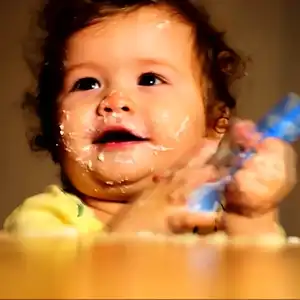
Smiling baby in highchair with spilled food

Five tips to soothe a teething baby

Discovering your child’s first tooth is an exciting milestone, but that moment can be quickly followed by sleepless nights for the whole family as they go through teething. There are many ways that you can help your baby’s teething pain.

Baby in towel with teething ring

Why is my baby crying? How to soothe a crying baby

If you’re a new parent, you’re probably not fluent in “baby” yet and don’t always understand what certain signs and behaviours mean. No parent wants to see their baby crying, and we know all you want is to ease their...
Baby in Blue Sleeping with Plushie

Why do babies cry at night? 7 ways to soothe night time crying

Is your baby crying at night and you don't know the reason? You’ve fed them, changed their nappy, comforted, tried to soothe them, and every other strategy that worked in the past, but your baby is still crying. Why do babies cry at night for no recognisable reason?
Father Interacting with Baby in Crib

What is weaning and the 3 stages

If you’re a parent preparing to start introducing solid foods to your baby, you’re probably excited about this new phase. Perhaps you’re also feeling a little confused about how to start the weaning process. Weaning can be broken down into three...
Baby in Highchair Eating from a Spoon

Baby congestion: why does my baby have a blocked nose?

Is your baby’s blocked nose quite a challenge? Babies get congested when too much mucus builds up in their noses - a blocked nose on its own is usually nothing to worry about if they are otherwise well and feeding normally. If your little one has a stuffy nose, it can sometimes be harder for them to sleep, and sleep comfortably when every moment of shut-eye is precious. So, how can you help your baby when they have a blocked nose? First, let's discover why  they have a blocked nose:

baby sucking her finger

Dehydration in babies: what are the signs and symptoms you need to look out for?

What are the signs of dehydration in babies you need to look out for? And how would you know if your baby is hydrated enough? Sometimes, adults don't even realise they're becoming dehydrated until they already are. We understand it can be even harder to pick...
baby being fed a bottle

Stage 1 of weaning: A guide to introducing foods

Is your baby ready for the very first stage of weaning? Excitingly, you may reduce the chances of a fussy eater and maybe even end up with a child who loves trying new foods and exploring different tastes and flavours. Like the African proverb suggests, it takes...
toddler holding spoon playing with food

6 Tips to help a teething baby sleep​

Wondering how to help get your teething baby to sleep? A teething, restless baby (especially at night) who’s hard to console and settle can be exhausting. Teething can be a painful and uncomfortable experience for some babies, which can make it harder for them to fall asleep, and often when they struggle to sleep, you do too.

If you want to know how to help a teething baby sleep, the good news is you’re not doomed to endless sleepless nights. Learn how to soothe your teething baby at night and help them sleep. First, let’s get back to basics:

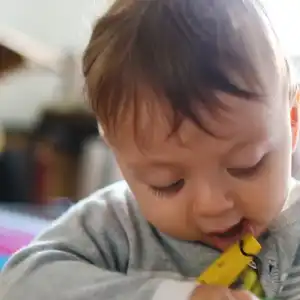
toddler chewing on colourful toy

Teething babies: causes, symptoms and tips on treating and comforting

It’s a wonderful moment when you see your baby’s first tiny white tooth but it isn’t always a smooth journey as new teeth can also cause a lot of pain and discomfort, as they push their way through sore, red gums. This is called teething. Teething can sometimes be quite a stressful process as there are no set rules on when the right time to start teething is and all babies experience it in different ways. This is why it’s important to learn how to spot the signs of teething and know what you can do to ease their pain.

Teething
Teething baby

How to help your teething baby

It’s a wonderful moment when you see your baby’s first tiny white tooth, but it isn’t always a smooth journey. New teeth can also cause a lot of pain and discomfort as they push their way through sore, red gums. This is called teething. Teething can sometimes be quite a stressful process both for you and your little one, as there are no set rules on teething. All babies experience teething in different ways, from when they start teething, to how painful it may be for them. Knowing how to soothe a teething baby will help to set your mind at ease, as well as help your little one to feel better.

Baby in towel with teething ring

What foods can you give your child with a sore throat?

A sore throat is common in both adults and children, with 5-24 year olds having the highest incidence. During the winter months, children at school can also catch strep throat (bacterial infection), although sore throats are usually caused by viruses (like cold and flu). If your child has a sore throat, it’ll feel painful for them to swallow and they may want to avoid eating. They might also have a temperature and not seem their normal, active selves.

Child eating yogurt from a spoon

What to do if your child has earache

Earaches are surprisingly common, particularly in young children. It can be distressing if you’re not sure of the cause or if your child has an ear infection. Read the below guidance on how to spot an earache and know what you can do to help.

Child laying down on pillow

Getting To Know Your Child's Headaches During Cold and Flu Season

When your child complains of a headache, it’s easy to conjure up worst-case scenarios and rush off to the doctor. However, just like adults, there are common and manageable causes of headaches in children, such as a cold or flu. During the cold and flu season, ear and sinus infections are also common causes of headaches in children, which may be accompanied by a fever. Thankfully, they can generally be relieved with over-the-counter pain medicines, along with healthy sleeping and eating habits.

Parent with hand on childs head

What Is A High Temperature In Children?

Generally, a fever is the body’s way to fight off illness or infection such as coughs and colds. A normal temperature in babies and children is about 36.4˚C, but this can vary slightly from child to child. A high temperature in children is considered to be 38˚C or higher. Temperature can vary depending on where you’re measuring your little one’s temperature and which type of thermometer you’re using. Digital thermometers are considered the fastest and most accurate thermometers to check your baby’s temperature.

child on sofa with blanket and thermometer in their mouth

Four Signs Your Baby has a Fever

A fever is part of our body’s natural defence against infection. Fever in babies and children may be caused by many things, from a simple cold to their first vaccinations. A fever may happen when infection-causing germs, such as bacteria or viruses, enter our body. Germs multiply better at normal body temperature, so a certain part of the brain tells our immune system to create a fever by raising the body’s temperature above normal, to help fight the germs. If you think your child may have a fever, these are some signs to look out for:

Baby laying on blanket

Coping With Back-To-School Bugs

When your child wakes up feeling unwell on a school day it can be difficult to make a decision. It may sometimes be tricky to tell whether their symptoms require keeping them away from playgroup, nursery, or school or if they might feel fine in a couple of hours. There’s always the risk that if you do send them to school, you might get a call to collect them halfway through the day. You might also feel that when germs like colds, flu and tummy bugs are going around during winter, keeping them home for every bug could cause them to miss too much school.

Child running in cape

Caring For Your Feverish Child Through The Night

If your child has a high temperature and is uncomfortable, you can help reduce their fever and keep them comfortable through the night. But how often should you check on them, how can you soothe them and how can you...
Sleeping child under blanket

What is paracetamol used for in children?

What is Paracetamol?

Paracetamol is a well-known painkiller that’s commonly used to help relieve pain and reduce fever in children. There are many pain-relieving products that contain paracetamol and it may also be included in cold and flu medicines designed for children of various ages, from 2 months. Paracetamol is a common medicine so its important to check the ingredients of any pain, fever, cold, cough or flu medicine before giving it to your child, to see if it contains paracetamol to make sure that you aren't giving them too much of a medicine as it can be dangerous.

Child taking medicine

How To Treat Your Child's Aches And Pains

As parents, we know that aches, pains, bumps, scrapes and bruises are all a part of growing up. But it can sometimes be difficult to tell what’s causing your little one’s pain. Knowing the cause of their pain can help you to treat them appropriately and help them feel better.

Older children may be able to explain exactly where they feel pain, but younger children may have more difficulty doing so, especially if they’re just starting to speak.

Young boy using stethoscope on a toy bear

How do you treat headaches in children

If your little one complains of a headache, it can be worrying. Thankfully, serious causes of headaches are quite rare in children, but they happen to be one of the most common types of pain. Although they can have a big impact on your child’s life, they’re relatively easy to treat in most cases. Understanding what causes headaches in children, how to treat them, and when you should be concerned, will help you know what to do next.

Parent with hand on childs head

How Do I Know If My Baby Has a Fever?

Realising that your baby or child has a fever can be scary but a high temperature is very common in young children and usually returns to normal within 3 or 4 days. A raised body temperature is the main symptom of a fever.

If you’re unsure of what your baby’s temperature should be, you’re not alone, here’s what you need to know: A normal temperature for babies and children is about 36.4°C, but may vary slightly from one child to another. In babies and children, anything above 38°C is considered a high temperature.

Baby with thermometer under their arm

What is ibuprofen?

How does ibuprofen work? How can it be used if your child has pain or fever? What are the different types of ibuprofen? Here you’ll find answers to commonly asked questions about ibuprofen, and how you can use it to help relieve your child’s pain and fever.
Father and child smiling together

Explore

We're there for you and your child at every stage of their development. Learn more about the most common concerns in babies and children, and practical parenting tips.

Resources

Babies

Looking after a baby can be a rollercoaster. With so much to consider – from how they’re sleeping, to weaning and teething, and all the key stages of their development, it’s easy to feel overwhelmed. Here, we’re sharing our knowledge and guidance for new parents, to help you to feel more confident in understanding your baby and their needs.

Baby

Kids

As children grow, their needs change as they journey through the different stages of childhood. This page will help you navigate your child’s changing needs, from how to deal with illnesses like cold and flu, to their dietary requirements. You’ll also find tips on bedtime struggles and how to make sure your child gets enough sleep. From toddlers right through to school age, we’ve got practical advice to help guide you through your child’s development at every stage.

Kids

Parents

We understand that as rewarding as raising your little one(s) is, it can also be a real struggle at times! Which is why it’s important to make sure that you feel supported through the fun times and the harder moments, too. Below, you’ll find handy guidance to help you deal with the variety of challenges parenthood brings, as well as useful information and tools to help reassure you.

Parents

All Topics