Children’s Pain

We're there for you and your child at every stage of their development. Learn more about the common concerns in babies and children, and practical parenting tips.

Children’s Pain

Children's Pain: Symptoms

We understand that if your child is suffering from pain, any parent will want to help as quickly as possible. Whether they are struggling with pains such as earache, growing pains, or toothache, we aim to provide you with tips of what you can do to help relieve your child's pain.

  • Fever is defined as a higher than normal temperature. It’s very common in young children, but usually passes after 3-4 days.
  • A fever happens when the body’s natural defence starts fighting an underlying infection such as a cough, cold or flu. Fever can arise in common childhood illnesses, such as chickenpox or tonsillitis. Or it can be a response to vaccination.

Dosage

Before giving your child any medication, make sure to check what the right dosage is for them.

DO NOT give to babies under 3 months or babies weighing less than 5kg.

1Do not give to babies aged 3-6 months for more than 24 hours. If symptoms persist after 24 hours or worsen, consult your doctor.

See leaflet for further information.

WARNING: Do not take more medicine than the label tells you to.

Articles

(22)

Resources

It can sometimes be difficult to know what to do if your child becomes unwell. There are many types of common illnesses that babies or children can suffer from, such as cold and flu, fevers and temperatures or a sore throat. We want to make sure you have useful information about how you can help your child if they become ill.

What is the baby vaccination schedule in the UK?

Knowing what injections your baby may need can be confusing at times. If you’re not sure which vaccines need to be given and when, here you’ll find a summary of the UK vaccination schedule and an explanation of why it’s important to follow it.
Child with a toy

How to treat sprains and strains in kids

Bumps, bruises, cuts and grazes are all a natural part of growing up. Sprains and strains are also common injuries and can be treated at home, along with some tender loving care and a child-friendly pain reliever such as Paracetamol or Nurofen for Children, which contains ibuprofen.

Child climbing on climbing wall

What are the five facts about fever every parent should know?

Generally, a fever is the body's natural reaction to illness or infection. A fever in a child can generally be described as anything above 38°C. A normal temperature in babies and children is about 36.4°C, but this can vary slightly.

child lying down on the sofa with a thermometer

How to treat your child’s earache

Earache is common in babies and small children. It can be painful for your little one and can leave you feeling a bit confused as to how to help them. Earaches in kids can be caused by many things, but sometimes the cause may be unknown.

child with blanket rubbing her eyes

Five tips to soothe a teething baby

Discovering your child’s first tooth is an exciting milestone, but that moment can be quickly followed by sleepless nights for the whole family as they go through teething. There are many ways that you can help your baby’s teething pain.

Baby in towel with teething ring

Getting To Know Your Child's Headaches During Cold and Flu Season

When your child complains of a headache, it’s easy to conjure up worst-case scenarios and rush off to the doctor. However, just like adults, there are common and manageable causes of headaches in children, such as a cold or flu. During the cold and flu season, ear and sinus infections are also common causes of headaches in children, which may be accompanied by a fever. Thankfully, they can generally be relieved with over-the-counter pain medicines, along with healthy sleeping and eating habits.

Parent with hand on childs head

What Is A High Temperature In Children?

Generally, a fever is the body’s way to fight off illness or infection such as coughs and colds. A normal temperature in babies and children is about 36.4˚C, but this can vary slightly from child to child. A high temperature in children is considered to be 38˚C or higher. Temperature can vary depending on where you’re measuring your little one’s temperature and which type of thermometer you’re using. Digital thermometers are considered the fastest and most accurate thermometers to check your baby’s temperature.

child on sofa with blanket and thermometer in their mouth

4 Things You Should Avoid Giving Your Kids When They're Fighting a Cold or Flu

When your little one is under the weather with a cold or flu, you want to see them get better as soon as possible. But there are some treatments that may not be appropriate to help fight off a cold or flu in children. 

Child under duvet blowing their nose

Can I give my baby ibuprofen?

When it comes to babies and ibuprofen, new parents often have questions: Can I give my baby ibuprofen? Does baby ibuprofen reduce a fever? It’s natural you’ll want to get clued up, to make sure you’re providing suitable care for...
baby lying down holding blanket

How to Give a Baby Liquid Medicine

When can you give your baby liquid medicine, and how should you give it to them? Parents become astounding researchers overnight but always remember to read the instructions on the label before giving your baby any type of medication, and even...
Baby given Medicine

Baby congestion: why does my baby have a blocked nose?

Is your baby’s blocked nose quite a challenge? Babies get congested when too much mucus builds up in their noses - a blocked nose on its own is usually nothing to worry about if they are otherwise well and feeding normally. If your little one has a stuffy nose, it can sometimes be harder for them to sleep, and sleep comfortably when every moment of shut-eye is precious. So, how can you help your baby when they have a blocked nose? First, let's discover why  they have a blocked nose:

baby sucking her finger

Dehydration in babies: what are the signs and symptoms you need to look out for?

What are the signs of dehydration in babies you need to look out for? And how would you know if your baby is hydrated enough? Sometimes, adults don't even realise they're becoming dehydrated until they already are. We understand it can be even harder to pick...
baby being fed a bottle

Teething babies: causes, symptoms and tips on treating and comforting

It’s a wonderful moment when you see your baby’s first tiny white tooth but it isn’t always a smooth journey as new teeth can also cause a lot of pain and discomfort, as they push their way through sore, red gums. This is called teething. Teething can sometimes be quite a stressful process as there are no set rules on when the right time to start teething is and all babies experience it in different ways. This is why it’s important to learn how to spot the signs of teething and know what you can do to ease their pain.

Teething
Teething baby

6 Tips to help a teething baby sleep​

Wondering how to help get your teething baby to sleep? A teething, restless baby (especially at night) who’s hard to console and settle can be exhausting. Teething can be a painful and uncomfortable experience for some babies, which can make it harder for them to fall asleep, and often when they struggle to sleep, you do too.

If you want to know how to help a teething baby sleep, the good news is you’re not doomed to endless sleepless nights. Learn how to soothe your teething baby at night and help them sleep. First, let’s get back to basics:

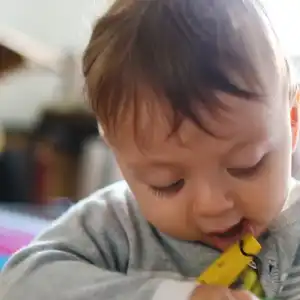
toddler chewing on colourful toy

How to help your teething baby

It’s a wonderful moment when you see your baby’s first tiny white tooth, but it isn’t always a smooth journey. New teeth can also cause a lot of pain and discomfort as they push their way through sore, red gums. This is called teething. Teething can sometimes be quite a stressful process both for you and your little one, as there are no set rules on teething. All babies experience teething in different ways, from when they start teething, to how painful it may be for them. Knowing how to soothe a teething baby will help to set your mind at ease, as well as help your little one to feel better.

Baby in towel with teething ring

Baby sleeping patterns: A guide for new parents

Sleepless nights can be exhausting, as you’ll know if you’ve struggled with trying to get your baby to sleep. It can be a tough time for parents since every baby is unique and adjusts to sleep cycles differently. Be flexible as you’ll need to be prepared to change routines as your baby grows.

Fortunately, there are practical tips we can share, that may help you feel less alone in this “learning- to-sleep” stage. If you're a new parent, you probably have questions like: "What is a healthy sleep pattern for my baby?" "How long do newborns sleep?" and "When do babies sleep through the night?"

Remember that what helps for one baby, may not help for another. It’s important to find what works best for your baby and to discuss the safest sleeping options or routines with your health visitor. Having your baby sleep in the same room as you during the day and night for the first 6 months, reduces the risk of SIDs (Sudden Infant Death Syndrome).

Baby in Blue Sleeping with Plushie

Four Signs Your Baby has a Fever

A fever is part of our body’s natural defence against infection. Fever in babies and children may be caused by many things, from a simple cold to their first vaccinations. A fever may happen when infection-causing germs, such as bacteria or viruses, enter our body. Germs multiply better at normal body temperature, so a certain part of the brain tells our immune system to create a fever by raising the body’s temperature above normal, to help fight the germs. If you think your child may have a fever, these are some signs to look out for:
Baby laying on blanket

What are the signs and symptoms of a sore throat in babies and children?

Do you know what signs to look out for if your baby or child has a sore throat? Along the road of hard knocks and parenting trials and errors, it's important to understand sore throat in children and also learn what to do. Here are some helpful tips to help you if your...
young girl with open mouth

Fever in babies: How to reduce their temperature

It can be worrying when your little one has a fever, but a fever is very common in young children and often goes back to normal without treatment. A fever is the body’s way of fighting infections like colds or the flu. Perhaps you’re wondering, “How can I help my child feel better and how can I treat my baby’s fever?”

Read on, for some helpful tips.

Fever
Baby sleeping with plush toy

Popular Products

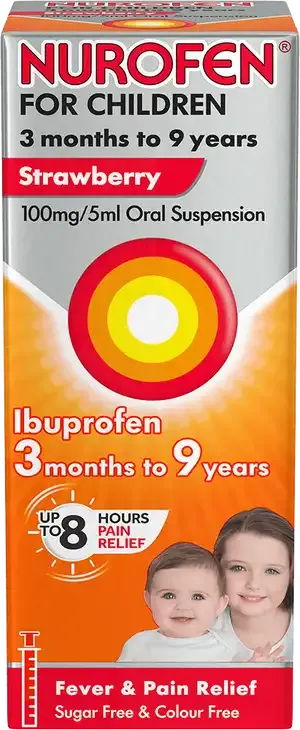
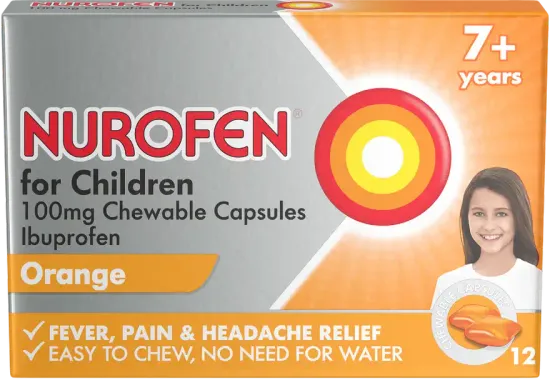
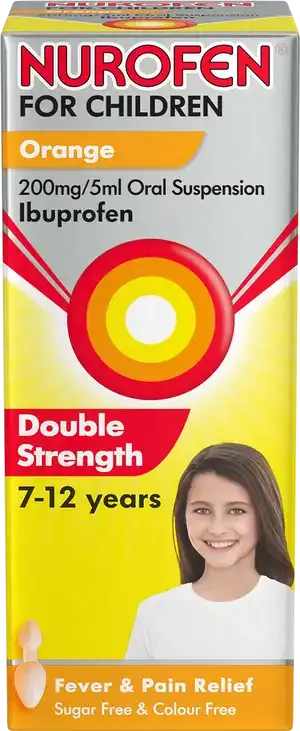
Explore our loved Nurofen products that parents use to help relieve their children’s pain.

Explore Pain Hubs

Head Pain

Understand head pain and ways to help manage it

Head Pain

Women's Pain

Understand pain in women and ways to help manage it

Women's Pain

Body Pain

Understand different types of body pain and ways to help manage it

body-pain