

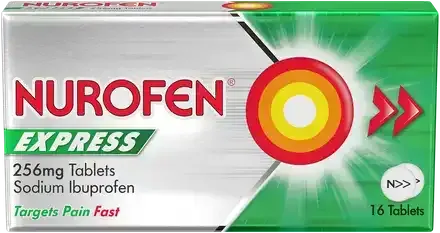
Nurofen Express 256mg Tablets
2x faster than standard ibuprofen**
Headache Headache


While some women find that regular exercise or applying heat to their tummy, relieves period pain, others find that taking a painkiller is the most effective way to relieve their pain. However, it can be difficult knowing which painkiller is the best option for your pain. In this article, we’ll explore the different painkillers available over the counter, and how they work for period pain.
Before we explore painkiller options, let’s discover the cause of this monthly pain.
During a normal period, chemicals called “prostaglandins” are thought to build up in the lining of the uterus (womb), which helps the muscular wall of uterus to contract and shed the lining.
Period pain may be caused when higher-than-usual levels of prostaglandins in the uterus lining and cause strong contractions. For some women this can feel like a dull constant pain in the tummy area, whereas for other women it may feel like an intense sharp pain. The experience may also differ with each period. You might also have other painful symptoms such as headaches, breast tenderness, pain in the lower back or top of your legs (thighs).
Usually, period pain starts at the same time that your period starts, but for some women it may start the day before their period.
The medical word for period pain is “dysmenorrhoea”. When there are no other health conditions causing period pain, in other words when it’s caused by the reasons described above, it is known as “primary dysmenorrhoea”. However, if there are other health reasons that may be causing period pains, it is known as “secondary dysmenorrhoea”.
Health conditions that might cause “secondary dysmenorrhoea” include:
Some women may have period pain if they have an intrauterine device (IUD) – a contraceptive that fits in the uterus.
You should see your doctor immediately if you have pain in your lower abdomen (tummy area) that is severe or worse than usual and if painkillers have not helped.
You should also see your doctor if:
Perhaps period pain is just a monthly irritation, or perhaps it's disrupting your daily life. Luckily, there are things you can do to help relieve your pain.
Exercising regularly, using heat on your tummy area and taking painkillers, are helpful ways to relieve your period pain.
Doctors may also recommend taking hormonal contraceptives (the combined pill or an injection) to help with period pains or heavy periods.
For many women, painkillers are usually an effective way to help relieve period pain. Painkillers that have anti-inflammatory properties, known as “Non-steroidal Anti-inflammatory Drugs (NSAIDs) are considered effective, because they block the production of prostaglandins in the uterus. Since high levels of prostaglandins are thought to be the reason for period cramps and pain, NSAIDs may be the first type of medicine recommended, providing it’s suitable for you.
Ibuprofen is a non-steroidal anti-inflammatory drug (NSAID). Like other NSAIDs, ibuprofen is often used for the relief of mild to moderate period pain.
The dose will depend on the type of ibuprofen tablet you’re taking, so read the usage instructions carefully. Usually, you can take ibuprofen up to three times a day. If you take ibuprofen three times a day, leave at least a 4-hour gap between doses.
When the incorrect dose is taken or it's taken at the wrong time, some women find they don’t get enough pain relief. It’s important to take the dose according to the dosing instructions up to the strongest dose that is allowed, according to your doctor or pharmacists recommendation.
For fast period pain relief try Nurofen Express 400mg Liquid Capsules, which contains ibuprofen. It starts to get to work in 8 minutes* giving up to 8 hours pain relief**.
**refers to absorption
**with 400 mg dose
Aspirin can also be helpful for some women with period pain. This medicine in a high dose, is also classified as an NSAID. Low dose aspirin is not typically considered as an NSAID. Seek advice from a doctor or pharmacist to understand the right dose for you.
Most people can take NSAIDs, however some people might not be able to take them, or they may need to be careful when taking them. It’s advisable to speak to a pharmacist or doctor for advice before taking an NSAID if you:
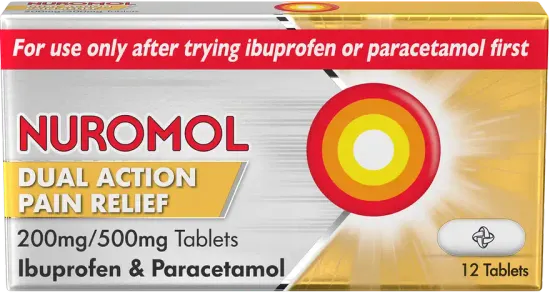
If you can’t take aspirin or ibuprofen, paracetamol is another over-the-counter option for period pain. It can be taken with ibuprofen if a strong dose of ibuprofen on its own is not effective. It’s advisable to first try a full dose of one painkiller before combining them.
Speak to your doctor or pharmacist before taking paracetamol if you:
In some cases, doctors may prescribe other types of anti-inflammatories such as naproxen, flurbiprofen or mefenamic acid depending on your medical conditions and the severity of your period pain.
There are other things you can try yourself, in addition to taking painkillers for period pain. These include:
Ibuprofen is an effective painkiller for period cramps and pain. Ibuprofen is an NSAID that blocks the production of chemicals called prostaglandins, that lead to period cramps and pain.
Nurofen Express 400mg Liquid Capsules starts to get to work in 8 minutes**, it can also provide more effective pain relief than standard ibuprofen.
**refers to absorption
For period pain, you can take 200mg to 400mg ibuprofen up to 3 times a day. Read dosage instructions carefully.
You should speak to your doctor immediately if your period pain is severe or worse than usual. Make an appointment with your doctor if your periods become irregular, more painful or heavier than usual, if you have pain during sex, when peeing or pooing or you’re bleeding between periods.
This article is not intended to treat or diagnose, and to reach out to a healthcare professional in case of any doubts.
RKT-M-27821
Understand head pain and ways to help manage it

Understand pain in women and ways to help manage it

Understand different types of body pain and ways to help manage it